Our Students and Our Institutions Deserve More: The Importance of Equitable Investments in Higher Education
In recent weeks, students have returned to their universities to embark on another year of academic and professional exploration. The start of a new academic year serves as an important reminder of the wealth of opportunity made possible by public higher education.
Yet the excitement of exploring new beginnings on campus is too often overshadowed by the financial uncertainty our state’s students face. For many, the start of a new academic year surfaces difficult questions on how they and their families will navigate steep tuition increases and gaps in financial aid. And the burden of financial strain is not just carried by students; institutions themselves face financial obstacles underscoring over 25 years of state disinvestment in public higher education. This longstanding absence of state support has positioned universities in a cycle of doing more with less year after year.
As someone who has spent their career in both policy and higher education, and as a current Trustee for Western Illinois University, I have sadly witnessed the erosion of state support and its pronounced impact on regional universities. State disinvestment has created a postsecondary landscape in which program cuts, deferred maintenance, and enrollment declines, particularly among Illinois’ Black, rural, and low-income students, have become commonplace. Importantly, no regional university has more than half of what it needs to serve its students. Such notable absence of state resources has forced institutions to shift costs to students, parents and families who are left to pay tuition and fees that are almost fifty percent higher than the national average.
By failing to meet the needs of its institutions, Illinois has exported its future workforce, threatening its own future economic stability. Students unable to afford in-state tuition often seek opportunities in neighboring states where they are more likely to build their professional lives upon graduating. The case for greater, more equitable state investment in our public institutions could not be more clear or urgent, especially given the significant role these institutions play in graduating a great number of public servants who serve communities across Illinois.
Western and Eastern Illinois University are critical pipelines for the educator workforce. Both EIU and WIU have large education programs and graduate a significant number of future educators. Given the significant regional teacher shortages across Illinois, their contribution to the state’s educator workforce is particularly valuable. Further, Western Illinois University is number two in the nation for producing professional, highly-trained law enforcement graduates.
Despite notable contributions to Illinois' workforce, many of our regional university faculty, staff, and students feel forgotten and undervalued. We have a groundbreaking opportunity to change that- currently, SB13/HB1581, the Adequate and Equitable Public University Funding Act, is pending in the General Assembly. Pillared by data and a deep understanding of each institution’s unique needs and mission, this novel model calls for an investment of $135M. In a state budget of $54 billion, this represents just three tenths of one percent! The passage of SB13/HB1581 is clear, feasible, and represents an immense scale of opportunity for Illinois. Upon full funding, SB13/HB1581 is estimated to produce an additional 122,200 additional graduates who could contribute roughly $342M more in local taxes each year and could lead to reductions in Medicaid and SNAP- tremendous statewide benefits.
As we begin the 2026-2027 academic year, I am reminded that higher education is a cornerstone of opportunity. Stronger state investment in our institutions of higher education is a worthwhile investment that can transform Illinois’ trajectory for generations to come.
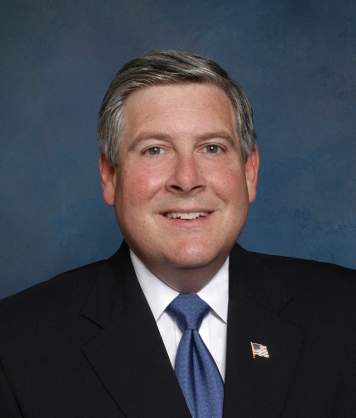
Kirk Dillard is a trustee of Western Illinois University and former Illinois state senator.